
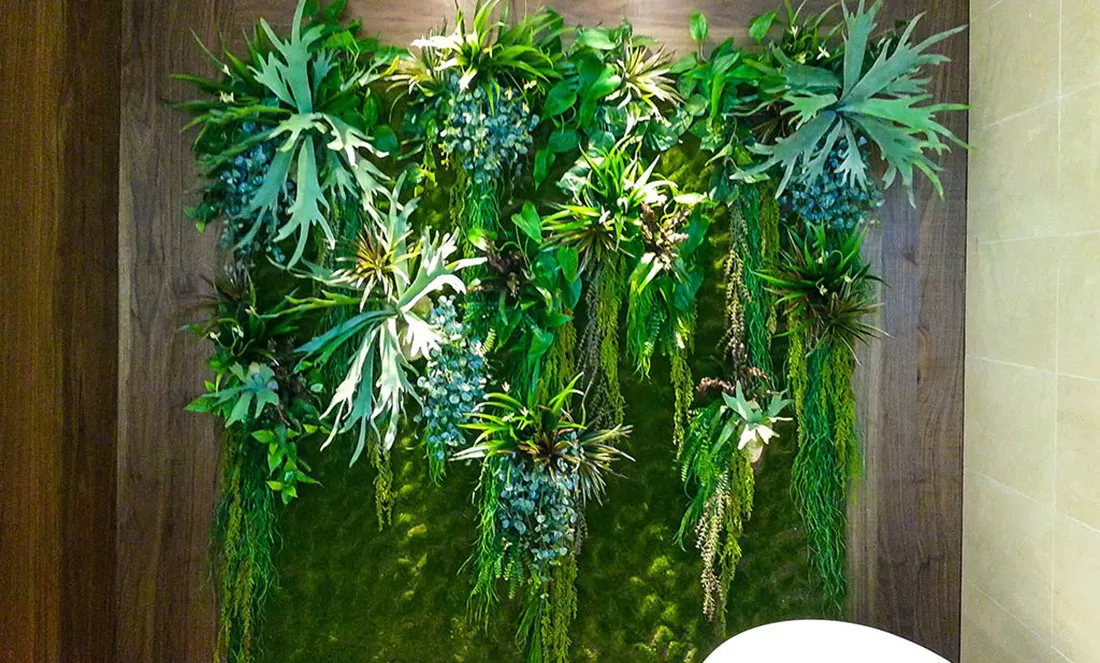
In recent years, green walls have become a major design trend across homes, offices, and commercial spaces in Malaysia. Whether it’s a lush vertical garden in Kuala Lumpur or a decorative feature wall in a café, greenery is widely appreciated for its aesthetic and wellness benefits. However, many property owners face a key question: should you choose an artificial green wall or real plants?
This article explores the differences between artificial green walls and living plant walls in the Malaysian context, helping you decide which is better for your needs.
What Is an Artificial Green Wall?
An artificial green wall is a vertical installation made from synthetic foliage designed to mimic real plants. These panels are typically made from plastic or textile materials and are mounted onto walls for decorative purposes.
Artificial green walls are popular in Malaysia due to their low maintenance and flexibility, making them ideal for both residential and commercial environments.
What Is a Real Plant Green Wall?
A real plant green wall, also known as a living wall or vertical garden, uses live plants grown on a vertical structure with irrigation and drainage systems. These installations are commonly found in eco-friendly buildings and modern offices.
Living walls contribute to a healthier indoor environment by improving air quality and humidity levels.
Key Differences: Artificial vs Real Green Walls
1. Maintenance Requirements
One of the biggest differences lies in maintenance.
Artificial green walls require minimal upkeep. There is no need for watering, pruning, fertilising, or pest control. Occasional dusting is usually sufficient.
In contrast, real plant walls demand regular care, including watering systems, trimming, and monitoring plant health. In Malaysia’s humid climate, this can also involve managing pests and mould.
Verdict:
Artificial green walls are better for busy homeowners or businesses with limited maintenance capacity.
2. Aesthetic Appeal
Artificial green walls have improved significantly in recent years, offering highly realistic textures and colours. However, they remain static and unchanging.
Real plants, on the other hand, provide a dynamic and natural look. They grow, evolve, and respond to light and environmental conditions, creating a more authentic atmosphere.
Verdict:
Real plants win in terms of authenticity and natural beauty.
3. Environmental Impact
Sustainability is an important consideration, especially in eco-conscious developments across Malaysia.
Real plant walls are biodegradable and environmentally friendly, contributing to biodiversity and reducing carbon levels.
Artificial green walls, while long-lasting, are typically made from plastic and have a higher environmental footprint.
Verdict:
Real plants are the better choice for sustainability and green building initiatives.
4. Health and Wellbeing Benefits
Living plants offer tangible health benefits. They help purify the air, regulate humidity, and reduce indoor pollutants. This can lead to fewer health issues such as fatigue and headaches.
Artificial green walls do not provide these benefits, as they are purely decorative.
Verdict:
Real plants are superior for improving indoor air quality and wellbeing.
5. Cost Considerations
Artificial green walls are generally more cost-effective in the long run. While the initial installation cost may vary, ongoing expenses are minimal due to the lack of maintenance.
Real plant walls require a higher upfront investment, including irrigation systems, lighting, and maintenance services. Over time, these costs can add up.
Verdict:
Artificial green walls are more budget-friendly overall.
6. Suitability for Malaysian Climate
Malaysia’s tropical climate presents both opportunities and challenges.
Real plants thrive in natural sunlight and humidity, making outdoor installations highly effective. However, indoor environments without sufficient light may struggle to support living walls without additional systems.
Artificial green walls are unaffected by environmental conditions and can be installed in any location, including low-light areas, air-conditioned offices, or enclosed spaces.
Verdict:
Artificial green walls offer greater flexibility in placement.
Pros and Cons Summary
Artificial Green Wall Malaysia
Pros:
- Low maintenance
- Cost-effective
- No pests or diseases
- Suitable for any environment
- Long-lasting appearance
Cons:
- No environmental or health benefits
- Made from synthetic materials
- Less authentic look
Real Plant Green Wall
Pros:
- Improves air quality and humidity
- Eco-friendly and sustainable
- Enhances wellbeing and productivity
- Natural and dynamic appearance
Cons:
- High maintenance
- Higher cost
- Requires proper lighting and irrigation
- Risk of pests and plant failure
Which Is Better in Malaysia?
The answer depends on your priorities.
- Choose artificial green walls if you want a low-maintenance, cost-effective, and flexible solution for decorative purposes.
- Choose real plant walls if you prioritise sustainability, health benefits, and a natural environment.
In Malaysia, many businesses and homeowners adopt a hybrid approach—using real plants in well-lit areas and artificial green walls in spaces where maintenance or lighting is a challenge.
Final Thoughts
Both artificial green walls and real plants have their advantages, and neither is universally “better.” The right choice depends on your budget, location, and goals.
If your focus is purely aesthetic with minimal effort, artificial green walls are a practical option. However, if you aim to create a healthier, eco-friendly environment, real plant walls offer unmatched benefits.
Ultimately, the best solution is one that aligns with your lifestyle and enhances your space in a meaningful way.


